Chapter 7: The Basics – Getting to Know Your Car — theory test questions and answers
60 practice questions for the UAE driving theory test on before you start: service and maintenance, how it all works: main components and systems, economical driving, driving with a heavy load or pulling a trailer and more, each with the correct answer and a short explanation from the handbook. Try each one before you open the answer.
Q1.Why should you study the driver’s manual, guarantee and service log of your car?
To keep the car safe and avoid big repair bills by following the maker’s recommendations
Because the police may ask to see them
Only to find the fuel filler
To learn how to drive faster
Show answer
Answer A: To keep the car safe and avoid big repair bills by following the maker’s recommendations. The manual tells you how to read the panel, check tyres, change wheels, service the car and choose fuel; ignoring the maker’s recommendations can mean a large repair bill.
Q2.You hear a noise from the brakes or engine while it is idling. What does this indicate?
Normal running-in
A serious problem
The air conditioner cycling
Low fuel
Show answer
Answer B: A serious problem. Listen, look, smell and feel your car; noise from the brakes or engine at idle indicates a serious problem.
Q3.Where is the engine usually mounted and what fuel do most passenger cars use?
At the rear; most run on diesel
Under the boot; most run on gas
In the middle; most run on electricity
At the front; most run on petrol
Show answer
Answer D: At the front; most run on petrol. The engine is usually mounted at the front and runs on petrol, diesel or gas; most passenger cars run on petrol.
Q4.Which of these is one of the four key functions of engine oil?
Charging the battery
Sealing the gap between cylinder wall and piston
Braking the wheels
Increasing the octane rating
Show answer
Answer B: Sealing the gap between cylinder wall and piston. Oil lubricates, cools, seals (between cylinder wall and pistons) and cleans the engine.
Q5.Why are regular engine-oil changes especially important in the Middle East?
Because the fuel is of lower quality
Because engines run at lower temperatures
Because of the hot climate, even though special oils exist for high temperatures
Because oil is cheaper here
Show answer
Answer C: Because of the hot climate, even though special oils exist for high temperatures. Regular oil changes are essential in the hot climate; check the oil with the dipstick and change oil and filter as the manual instructs.
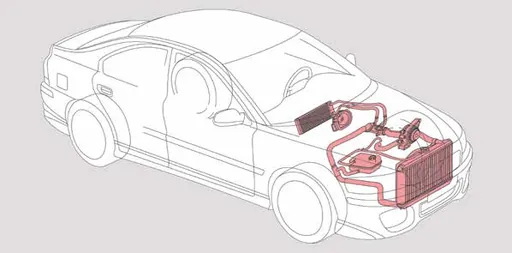
Q6.What is the purpose of the highlighted system in this diagram?
To cool the engine and keep it at the correct operating temperature
To charge the battery
To lubricate the moving parts
To clean the exhaust gases
Show answer
Answer A: To cool the engine and keep it at the correct operating temperature. The cooling system, using ethylene-glycol and water, keeps the engine at the correct temperature and helps prevent rust inside it.
Q7.Your engine overheats. Why must you be very careful with the radiator cap?
If the water is boiling you could be badly burned
The cap may be lost
Cold air could crack the radiator
The cap holds the fuse for the fan
Show answer
Answer A: If the water is boiling you could be badly burned. Stop, let the temperature fall to about 90°C, and be extremely careful undoing the radiator cap; boiling water can burn you badly.
Q8.Why should you never fill a hot radiator with cold water?
It can easily crack the cylinder block
It damages the water pump
It dilutes the coolant
It will boil away immediately
Show answer
Answer A: It can easily crack the cylinder block. Top up with hot water; filling a hot radiator with cold water can crack the cylinder block.
Q9.When driving up a steep hill on a hot day, what does the book advise about the air conditioner?
Switch it to fresh-air mode
Turn it off to prevent overheating and gain extra power
Leave it on; it has no effect
Turn it to maximum to cool the engine
Show answer
Answer B: Turn it off to prevent overheating and gain extra power. Turn off the A/C or climate control on a steep hill to prevent overheating and get extra power; on hot days use the recirculated-air function.
Q10.Which grade of unleaded petrol can all cars in the UAE run on?
“E Plus” Red 91 octane
Any diesel grade
“Special” Green 95 octane
“Super” Blue 98 octane
Show answer
Answer C: “Special” Green 95 octane. Three grades are sold: E Plus 91, Special 95 and Super 98. All cars can run on Special 95; some high-performance cars need Super 98.
Q11.What do octane numbers measure?
The fuel’s anti-knocking performance
The percentage of lead in the fuel
The fuel’s energy content
The fuel’s boiling point
Show answer
Answer A: The fuel’s anti-knocking performance. Octane numbers measure a fuel’s anti-knocking performance; lead is no longer added because of health and environmental harm.
Q12.Why should you avoid breathing petrol fumes when filling up?
They can cause cancer
They reduce octane
They damage the paint
They cause drowsiness
Show answer
Answer A: They can cause cancer. Fuel fumes can cause cancer; wash thoroughly if you get fuel on your skin.
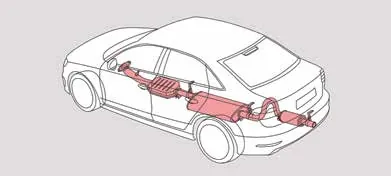
Q13.The device shown in this exhaust system is the catalytic converter. What does it do?
Removes carbon dioxide and sulphur
Cools the exhaust gases
Converts carbon monoxide, hydrocarbons and nitrogen oxide into harmless compounds
Silences the engine noise
Show answer
Answer C: Converts carbon monoxide, hydrocarbons and nitrogen oxide into harmless compounds. The catalytic converter uses a catalyst to convert harmful compounds into harmless ones; carbon dioxide and sulphur are still emitted, and such cars must use unleaded petrol.
Q14.What is carbon monoxide, found in exhaust gases?
A visible black smoke
A gas that only affects the environment, not people
A colourless, odourless and poisonous gas
A harmless gas that smells of sulphur
Show answer
Answer C: A colourless, odourless and poisonous gas. Carbon monoxide is colourless, odourless and poisonous; a corroded exhaust can let it seep into the passenger compartment.
Q15.Why is driving with the boot open dangerous?
Carbon monoxide may be sucked into the passenger compartment
The rear lights are hidden
The boot light drains the battery
Luggage may fall out
Show answer
Answer A: Carbon monoxide may be sucked into the passenger compartment. Driving with the boot open can suck carbon monoxide into the passenger compartment; never run the engine in an enclosed space longer than necessary.
Q16.The exhaust is producing an abnormally loud noise. What is this likely to mean?
The fuel octane is too low
The silencer is damaged or cracked
The engine needs more oil
The catalytic converter is working hard
Show answer
Answer B: The silencer is damaged or cracked. An abnormally loud exhaust may mean the silencer has been damaged or has developed a crack; have the exhaust checked at each service.
Q17.In this diagram, what does the belt-driven generator do?
Produces the electrical power, which is stored in the battery
Pumps coolant through the radiator
Drives the air conditioner
Turns the water pump only
Show answer
Answer A: Produces the electrical power, which is stored in the battery. A generator connected to the engine by a drive belt produces the electrical power, which is stored in the battery; a badly adjusted belt lowers output and lights a warning lamp.
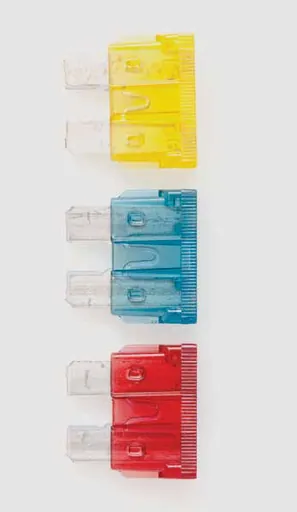
Q18.An electrical component fails completely. What is the first thing to check?
The bulb
The generator drive belt
The battery voltage
The fuse
Show answer
Answer D: The fuse. Electrical components are almost always protected by a fuse to prevent fire; if a component fails completely, check the fuse first.
Q19.You need to jump-start from another vehicle. What must be true of the other battery?
It must be fully discharged first
It must be larger than yours
It must be of the same voltage as yours
It must be disconnected from its car
Show answer
Answer C: It must be of the same voltage as yours. When jump-starting, the other vehicle’s battery must be of the same voltage; take care, as battery acid is corrosive.
Q20.When jump-starting, where should the last black lead be connected?
To the red lead
To the cylinder block or another earth point on the discharged car, not the battery
To the positive terminal of the discharged battery
To the negative terminal of the discharged battery
Show answer
Answer B: To the cylinder block or another earth point on the discharged car, not the battery. Connect the final black lead to the cylinder block or similar earth of the discharged car; a spark at the battery could detonate hydrogen gas around it.
Q21.When may full-beam headlights be used?
Only in fog
Whenever street lighting is poor
At any time of day on unlit roads
In darkness, except with oncoming vehicles or when close behind a vehicle in your lane
Show answer
Answer D: In darkness, except with oncoming vehicles or when close behind a vehicle in your lane. Full beam may be used in darkness except with oncoming vehicles or when close behind another vehicle; you need not dip for pedestrians.
Q22.What colour must indicators be, and how many must a car have?
Orange: two rear only
Orange-yellow: two front, two rear and one on each side
White: one on each corner
Red: two front and two rear
Show answer
Answer B: Orange-yellow: two front, two rear and one on each side. All cars must have orange-yellow indicators — two at the front, two at the rear and one on each side.
Q23.May fog lights be used instead of dipped headlights?
Only on motorways
Yes, in fog or heavy rain; they may also be used together with dipped headlights
No, never
Only at night
Show answer
Answer B: Yes, in fog or heavy rain; they may also be used together with dipped headlights. Fog lights may be used instead of dipped headlights in fog or heavy rain, and both can be used together.
Q24.When should you use rear fog lights?
Always with dipped headlights
Whenever visibility is below 1 km
Only in thick fog, heavy rain or similar; they can dazzle and be mistaken for stoplights
Whenever it is dark
Show answer
Answer C: Only in thick fog, heavy rain or similar; they can dazzle and be mistaken for stoplights. Rear fog lights can dazzle drivers behind and be mistaken for brake lights; use them only in thick fog, heavy rain or similar.
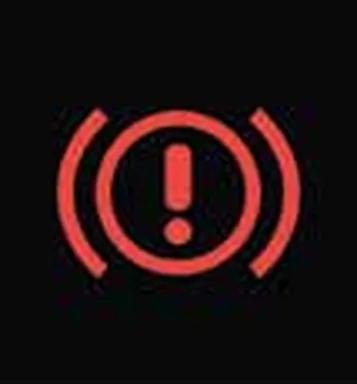
Q25.This red lamp lights on the dashboard. What does it warn of?
Airbag fault
Low oil pressure
Engine overheating
Brake condition: worn brake pads or low brake fluid
Show answer
Answer D: Brake condition: worn brake pads or low brake fluid. Lamp 1 is the brake condition light, warning of brake pad wear or low brake fluid level.
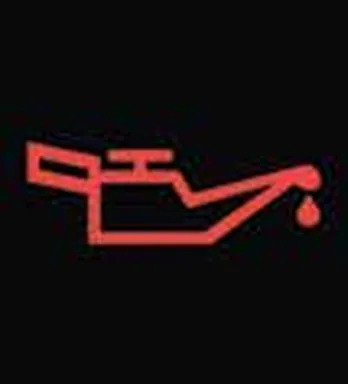
Q26.This red lamp stays on with the engine running. What does it mean?
The fuel is low
The oil needs changing at the next service
The battery is not charging
Oil pressure is dangerously low or oil is not circulating
Show answer
Answer D: Oil pressure is dangerously low or oil is not circulating. The oil pressure lamp shows the oil is dangerously low or not circulating; it lights when the ignition is on and should go out as the engine starts.
Q27.This lamp comes on while the engine is running. What does it indicate?
The headlights are on
The battery is fully charged
A problem with the electrical charging system
The alarm is armed
Show answer
Answer C: A problem with the electrical charging system. The ignition (charging) warning light shows a problem with the electrical charging system, e.g. a slack generator belt.
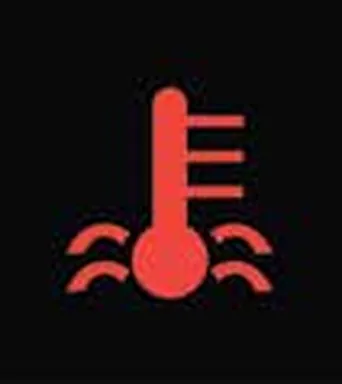
Q28.What does this dashboard symbol relate to?
Tyre pressure
Outside air temperature
Low washer fluid
Engine (water) temperature — it can warn of overheating
Show answer
Answer D: Engine (water) temperature — it can warn of overheating. The temperature gauge measures water temperature and can tell you if the engine is overheating.
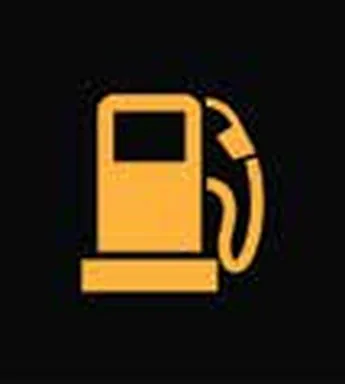
Q29.What does this amber lamp mean?
You are running on a low fuel level
Wrong fuel has been used
The fuel cap is open
Fuel pressure is high
Show answer
Answer A: You are running on a low fuel level. The fuel gauge lamp warns that you are running low on fuel.
Q30.What does this blue lamp indicate?
Parking lights are on
High beam (full beam) is on
Dipped headlights are on
Fog lights are on
Show answer
Answer B: High beam (full beam) is on. The high-beam indicator light is usually blue; remember to dip for oncoming vehicles.
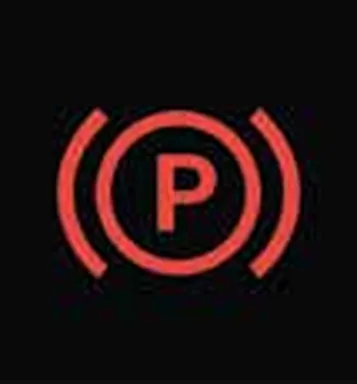
Q31.What does this red lamp mean?
Parking sensors are active
Park the car: engine fault
Power steering fault
The parking brake is on
Show answer
Answer D: The parking brake is on. Lamp 7 shows the parking brake (handbrake) is ON.
Q32.What does this amber lamp indicate?
Reversing lights are on
Rear fog lamps are on
Dipped headlights are on
Front fog lamps are on
Show answer
Answer B: Rear fog lamps are on. Lamp 8 is the rear fog lamp indicator; only use rear fog lamps in thick fog or heavy rain.
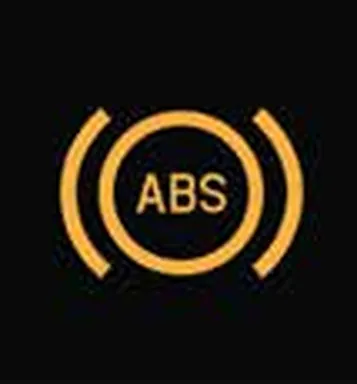
Q33.This amber lamp comes on. What does it mean?
ABS is actively working
Brake pads are worn
The anti-lock braking system is not functioning
The brakes are overheating
Show answer
Answer C: The anti-lock braking system is not functioning. The ABS warning light shows the anti-lock braking system is not in function; normal braking still works but wheels may lock.
Q34.What does this lamp warn of?
The airbag / SRS system is not functioning
The seat is not locked
A door is open
A passenger is not wearing a seat belt
Show answer
Answer A: The airbag / SRS system is not functioning. The airbags or SRS (Supplemental Restraint System) light shows the airbag system is not in function.
Q35.What does this lamp mean?
The windscreen is frozen
The wipers are worn
The heated screen is on
Windscreen washer fluid is low
Show answer
Answer D: Windscreen washer fluid is low. Lamp 11 warns that the windshield wiper (washer) fluid is low.
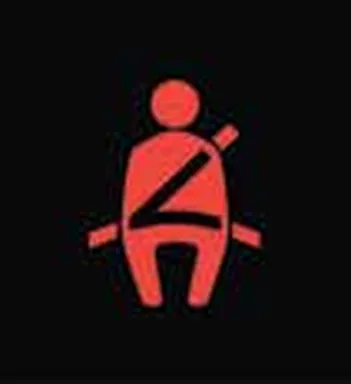
Q36.What does this red lamp remind you of?
Adjust the head restraint
Passenger seat occupied
Airbag fault
Fasten the seat belt
Show answer
Answer D: Fasten the seat belt. Lamp 12 is the seat belt warning light.
Q37.What happens when you press the clutch pedal?
The brakes are applied to all wheels
The engine speed increases
The gearbox changes up automatically
The engine is disconnected from the transmission and no power reaches the drive wheels
Show answer
Answer D: The engine is disconnected from the transmission and no power reaches the drive wheels. The clutch sits between engine and gearbox; pressing the pedal decouples the engine so no power is transferred until it is re-engaged.
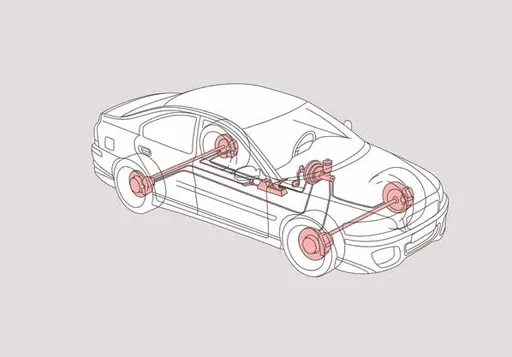
Q38.This diagram highlights the main brake system. How is it operated and on which wheels?
Electrically, on all four wheels
Hydraulically, on all four wheels
Mechanically, on the rear wheels only
Hydraulically, on the front wheels only
Show answer
Answer B: Hydraulically, on all four wheels. The main brake acts on all four wheels and is hydraulic (dual-circuit); the parking brake is mechanical.
Q39.Why is the main brake system a dual-circuit type?
So that some wheels can still be braked if one circuit fails completely
To reduce brake fluid consumption
So the handbrake works hydraulically
To double the braking force
Show answer
Answer A: So that some wheels can still be braked if one circuit fails completely. With a dual-circuit system, two or three of the four wheels can still be braked if one circuit fails; if the main brake fails completely, call a breakdown truck.
Q40.The brake fluid level has dropped by several centimetres. What does this signal?
Overheated brakes
Normal consumption
Worn brake pads
A leak
Show answer
Answer D: A leak. Brake fluid is not consumed normally; a drop of several centimetres means a leak, while a few millimetres suggests wearing pads.
Q41.Why must you be very careful with the brakes if your car is being towed with the engine off?
The handbrake is disabled
The brakes lock automatically
The servo (booster) only works with the engine running, so braking is very difficult
The ABS engages continuously
Show answer
Answer C: The servo (booster) only works with the engine running, so braking is very difficult. The servo uses engine vacuum to multiply pedal force; with the engine off, braking is very difficult and extreme caution is needed.
Q42.What does ABS do when you brake hard in an emergency?
Shortens the stopping distance on all surfaces
Prevents the wheels locking and helps you keep steering control
Applies the handbrake automatically
Switches off the engine
Show answer
Answer B: Prevents the wheels locking and helps you keep steering control. ABS prevents wheel lock and preserves directional stability and steering control; a yellow dashboard light shows if it fails.
Warm the brakes, check the ABS light, test the handbrake
Show answer
Answer A: Check brakes work, check stopping distance and road friction, check brakes pull evenly. Test braking checks that the brakes function, the stopping distance and surface friction, and that the brakes pull evenly — make sure nobody is behind you first.
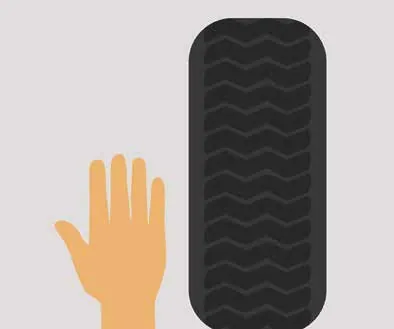
Q44.At roughly what tread depth does a tyre start to lose its grip and aquaplaning risk rise steeply?
About 1 mm
About 6 mm
About 9 mm
About 3 mm
Show answer
Answer D: About 3 mm. By about 3 mm of tread the tyre loses grip and aquaplaning risk increases steeply; a new tyre has about 9 mm; TWI markers show when it is bald.
Q45.What does the tyre date code embossed on the sidewall tell you?
The tread depth when new
The maximum speed rating
The week and year of manufacture
The recommended pressure
Show answer
Answer C: The week and year of manufacture. The date code gives the week then the year, e.g. ending 02 for 2002; age matters — a tyre may need changing after 3 years even with low mileage.
Q46.What are the effects of slightly under-inflated tyres?
No effect if under 10%
Better grip and longer life
Lower fuel consumption
Higher fuel consumption, harder handling and shorter tyre life
Show answer
Answer D: Higher fuel consumption, harder handling and shorter tyre life. Under-inflation increases fuel consumption, makes the car harder to handle and shortens tyre life; slight over-inflation does not damage the tyre.
Q47.When replacing tyres, what is the minimum you should change at a time?
Only the front two
At least a pair, so each pair of wheels has identical tyres
One tyre at a time
All four, always
Show answer
Answer B: At least a pair, so each pair of wheels has identical tyres. Change at least a pair at a time and keep to the tread pattern, size and type that came with the car for all four wheels.
Q48.How much faster do tyres wear at 120 km/h compared with 80 km/h?
The same
About 20% faster
Twice as fast
Four times as fast
Show answer
Answer C: Twice as fast. The faster you drive the hotter the tyre; tyres wear twice as fast at 120 km/h as at 80 km/h.
Q49.What is the main cause of excess wear and tear on tyres?
Driving in the rain
Using the handbrake
Wrong wheel alignment
High tyre pressure
Show answer
Answer C: Wrong wheel alignment. Wrong wheel alignment is the main cause of excess tyre wear; unbalanced wheels also cause wobble and extra wear.
Q50.The car tends to pull to one side on a straight, level road. What may be the cause?
Wheels need aligning or one front tyre has too little air
The clutch is slipping
The battery is low
The rear fog light is on
Show answer
Answer A: Wheels need aligning or one front tyre has too little air. Pulling to one side points to wheel alignment or low pressure in a front tyre; heavy steering can mean a steering-gear fault.
Q51.Which fluid is used for power steering?
Brake fluid
Coolant
Automatic transmission oil (a special high-pressure fluid)
Ordinary engine oil
Show answer
Answer C: Automatic transmission oil (a special high-pressure fluid). Power steering uses automatic transmission oil; never use ordinary engine oil. Never drive with defective power steering.
Q52.For economical driving, at roughly what engine speed is a suitable uniform throttle level?
Around 1,000 rpm
Around 3,000 rpm
Around 4,500 rpm
Around 2,000 rpm
Show answer
Answer D: Around 2,000 rpm. Keep the throttle uniform at around 2,000 rpm and use fifth gear where possible; accelerate in each gear to peak torque, normally around 3,000 rpm.
Q53.You see the light ahead is red. What is the economical way to approach?
Keep speed and brake hard at the line
Decelerate using engine braking so the light may change to green before you stop
Change down through every gear
Coast in neutral
Show answer
Answer B: Decelerate using engine braking so the light may change to green before you stop. Brake by decelerating (engine braking) and approach so the lights have time to change, avoiding unnecessary stops.
7.4 Driving with a heavy load or pulling a trailer
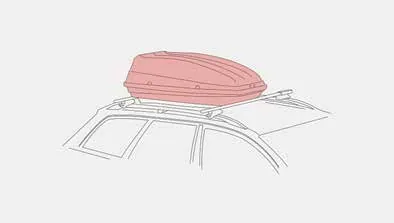
Q54.How should a load be positioned and secured on a roof rack like this?
Against the front edge, secured so it cannot roll, slip or fall, and checked frequently
Loose, so it can shift on corners
Only under a tarpaulin, without straps
At the rear edge to reduce wind noise
Show answer
Answer A: Against the front edge, secured so it cannot roll, slip or fall, and checked frequently. Position the load against the front edge, secure it firmly, remember wind effects on tarpaulins, and check frequently; roof loads raise the centre of gravity.
Q55.How does a heavy load affect your car’s performance?
It affects cornering, acceleration and braking distance, and overtaking takes longer
It only affects fuel consumption
It improves grip and shortens braking distance
It has no effect if within the axle limit
Show answer
Answer A: It affects cornering, acceleration and braking distance, and overtaking takes longer. A heavy load affects cornering, acceleration and braking distance; overtaking takes longer and braking distance increases downhill.
Q56.May a child sit on an adult’s lap in a moving car?
Yes, if the adult wears a seat belt
Never
Yes, on short journeys
Yes, in the rear seat
Show answer
Answer B: Never. A child should never sit on the lap of an adult in a moving car; never carry more passengers than allowed and never let them obstruct your view or control.
7.5 Testing time: Vehicle inspection and registration
Q57.Your car fails the Vehicle Inspection Centre (VIC) test. What is its status?
It may be driven for 30 days while repairs are arranged
It may be driven to and from work
It is not roadworthy and should not be driven until all faults are repaired
It may be driven only in daylight
Show answer
Answer C: It is not roadworthy and should not be driven until all faults are repaired. Until faults are fixed the car is not roadworthy and should not be driven; driving an unroadworthy car can bring a hefty fine.
Q58.What is an International Driving Licence?
A licence valid for heavy vehicles abroad
A translation of your UAE licence into foreign languages, issued by Automobile Clubs
A replacement for the UAE licence
A licence issued by the VIC
Show answer
Answer B: A translation of your UAE licence into foreign languages, issued by Automobile Clubs. An International Driving Licence is a translation of your UAE licence into various languages; Automobile Clubs in the UAE issue it.
Q59.Which type of motor insurance is compulsory in the UAE, and what does it cover?
Theft insurance only
Comprehensive insurance covering your own vehicle
Passenger insurance only
Third party insurance: injuries and damage to third parties, not your own vehicle
Show answer
Answer D: Third party insurance: injuries and damage to third parties, not your own vehicle. Third party insurance is compulsory; it covers injury and damage to others but not your own vehicle or load, so extra insurance is wise.
Q60.After an accident, why should you never accept the blame directly on the spot?
Because it is illegal to speak to the other driver
Because insurers pay only if the police decide
You may be in shock, and anything you say may be noted and used against you later
Because it delays the ambulance
Show answer
Answer C: You may be in shock, and anything you say may be noted and used against you later. Never accept blame on the spot, especially before the police; statements made in shock or confusion may be used against you later.
smartphone Android app
Practise anywhere, even offline
The free Android app has the same questions, a timed mock exam, road-sign flashcards and a daily practice streak. Sign in with Google to keep it in step with this website.